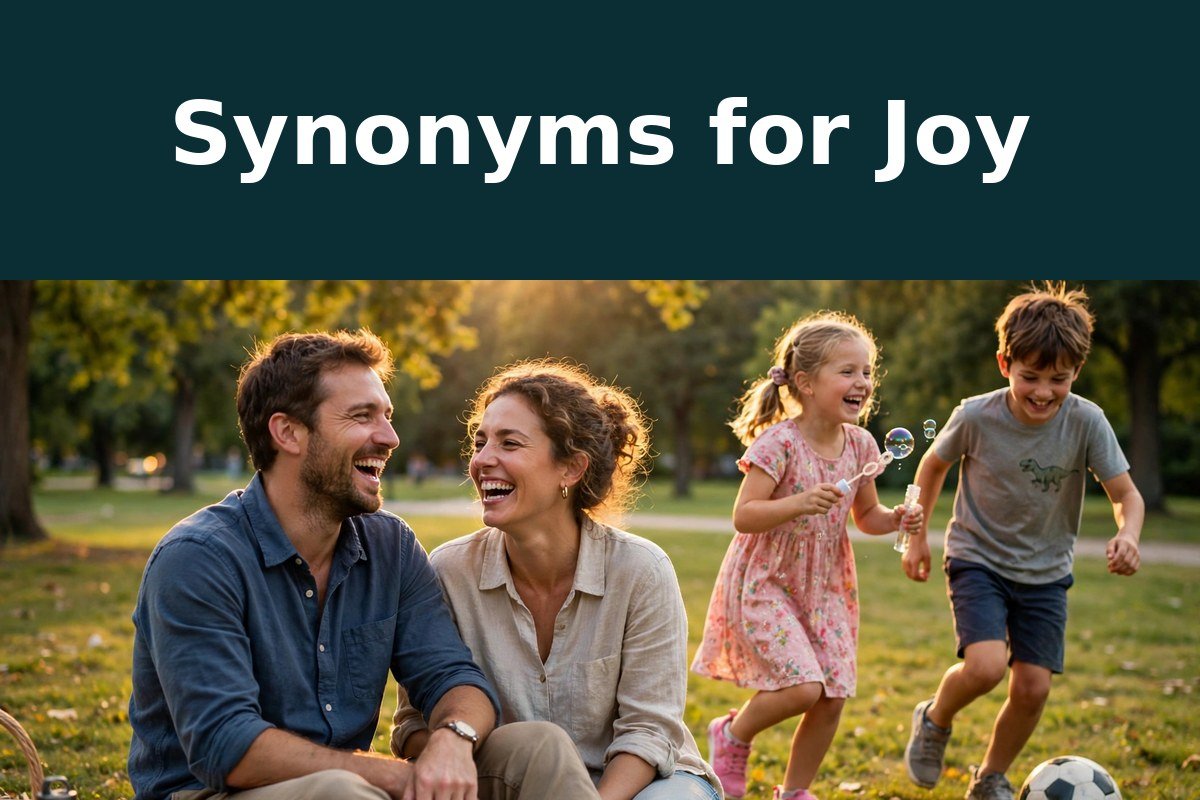
36 Synonyms for Joy to Brighten Your Writing
Joy is a warm, bright feeling, but it is not always the same size. Sometimes it is a quiet smile. Sometimes it is loud laughter with people you love. The best word depends on how strong the feeling is and where it comes from.
This guide gives you 36 synonyms for joy, grouped by strength. You will see which words fit everyday writing, which suit a celebration, and which sound more formal or literary. Use them to say exactly what you mean, without repeating the same word again and again.
Quick Answer
The closest everyday synonyms for joy are happiness, delight, gladness, cheerfulness, and bliss. For a stronger feeling, try elation, euphoria, or jubilation. For a lighter, everyday mood, contentment, pleasure, and enjoyment often fit better. Browse more words in the Feelings Synonyms collection for related feelings.
What Joy Really Means
Merriam-Webster defines joy as “a feeling of great happiness or pleasure,” and also as the expression of that feeling. That short definition points to two sides of the word. Joy can be the feeling inside you, and it can be the laughter or celebration other people can see.
That is why one replacement does not work everywhere. A quiet moment after good news is not the same as a crowd cheering at a wedding. The words below keep those differences clear.
Pick by Strength
| Feeling | Try this | Avoid this |
|---|---|---|
| Quiet and steady | contentment, pleasure | ecstasy, rapture |
| Warm and everyday | happiness, gladness | exultation, revelry |
| Big and loud | jubilation, exuberance | contentment, satisfaction |
| Deep and almost overwhelming | bliss, ecstasy | cheer, gaiety |
Use the table as a first check, then read the notes in each group. Tone matters as much as strength.
Strong, Overwhelming Joy
These words describe joy at its highest level. They suit peak moments, not ordinary good days.
- happiness — the most general word for feeling good; safe in almost any sentence.
- delight — pleasure mixed with surprise or charm; often caused by something specific.
- bliss — deep, complete happiness; calm as well as joyful.
- elation — a sudden lift after success or good news.
- euphoria — an intense, almost floating high; stronger than simple happiness.
- ecstasy — joy so strong it feels overwhelming; use sparingly.
- rapture — joy mixed with wonder; often literary or poetic.
- exuberance — joy that bursts out in energy and movement.
- jubilation — loud, public joy after a victory or happy event.
- glee — open, almost mischievous delight; often used for children or playful moments.
Elation and euphoria both follow good news, but euphoria feels more physical and intense. Jubilation is public by nature, while bliss can be completely private.
Everyday, Lighter Joy
These words fit daily life, friendly messages, and simple pleasures. They do not overpromise.
- gladness — a gentle, sincere form of happiness.
- cheerfulness — a bright, upbeat mood that other people can notice.
- merriment — lively fun, often with laughter and company.
- gaiety — light, carefree fun; a little old-fashioned in tone.
- mirth — laughter itself, or the joy behind it; slightly literary.
- cheer — a short, warm lift in mood; also used as a shout of support.
- joyfulness — the plain noun form of being joyful; clear but less common.
- lightheartedness — a free, untroubled mood with no heavy worry.
- buoyancy — a mood that bounces back quickly after a setback.
- felicity — happiness, often in words or expression; literary in tone.
Gaiety and mirth can sound dated in a casual email. Gladness and cheerfulness are safer choices for modern writing.
Quiet Satisfaction and Enjoyment
Joy is not always loud. These words cover the calmer end of the feeling, where peace and pleasure meet.
- contentment — being at ease with how things are; quieter than joy.
- pleasure — enjoyment from something good, from a meal to a visit.
- satisfaction — pleasure because something turned out well.
- enjoyment — the act or feeling of taking pleasure in something.
- gratification — pleasure after a wish or need is met; more formal.
- fulfillment — a deeper sense of purpose being met; long-lasting rather than brief.
- exultation — proud, triumphant joy after a hard-won success.
- revelry — noisy, festive celebration with others.
- festivity — the joyful mood of a holiday or party.
- celebration — joy shown through an event or gathering.
- rejoicing — open expression of joy, often after relief or good news.
- thrill — a sharp rush of excitement; joyful, but also nervous.
- ebullience — overflowing enthusiasm that is hard to hide.
- vivacity — lively energy and spirit in a person.
- zest — eager enjoyment of life; best for attitude, not a single moment.
- high spirits — a cheerful, energetic mood, often in a group.
Fulfillment and satisfaction look back on something completed. Thrill and zest look forward, full of energy for what comes next.
Examples in Real Sentences
- The letter brought her great happiness after months of waiting.
- The children burst into jubilation when their team scored the winning goal.
- A walk in the morning sun gave him a quiet sense of contentment.
- Her delight was clear when she opened the gift from her sister.
- Before: “The news gave us joy.” After: “The news filled us with elation.”
- Before: “It was a joy to see them.” After: “It was a delight to see them.”
Notice how the stronger words change the scene. Elation adds surprise and lift. Delight adds warmth and charm. Contentment slows the sentence down.
Common Mistakes
- Do not use ecstasy for a small pleasure. A good cup of coffee is a pleasure, not ecstasy.
- Do not swap joy with celebration in every sentence. Celebration is an event; joy is a feeling.
- Watch the noun and verb forms. You feel joy, but you rejoice; “rejoicing” works as a noun, while “rejoice” is the verb.
- Avoid stacking strong words. “Blissful euphoric ecstasy” says less, not more, than one well-chosen word.
Frequently Asked Questions
What is the best synonym for joy in everyday writing?
Happiness is the safest choice. It is clear, neutral, and understood by every reader.
Is delight a synonym for joy?
Yes, when the joy comes from something pleasing or charming. Delight is often more specific than joy, tied to a moment or a thing.
What is a stronger word than joy?
Elation, euphoria, and ecstasy are stronger. Use them only for peak moments, or they will sound exaggerated.
Can joy describe a thing, not just a feeling?
Yes. A person or event can be a joy, as in “the baby is a joy.” In that sense, delight and treasure-like words such as celebration fit the cause, not the feeling itself.
Is contentment the same as joy?
Not quite. Contentment is quieter and steadier. Joy often has more energy and brightness.
What word should I use in a formal message?
Gladness and satisfaction work well in formal writing. Bliss and rapture can sound too poetic for a business note.
Conclusion
Joy covers a wide range, from quiet contentment to loud jubilation. Start with the strength of the feeling, then match the tone to your reader. When in doubt, choose happiness for everyday writing and save the strongest words for moments that truly deserve them.
For more help with the exact meaning, see the Merriam-Webster entry for joy.